
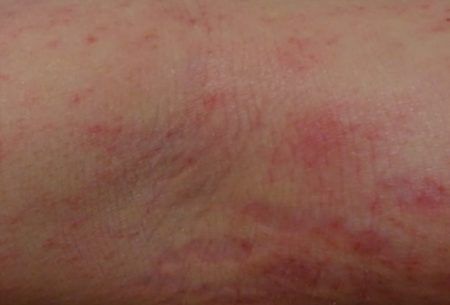
Patients

Atopic dermatitis

What is BioDay?

The BioDay registry is a prospective cohort study. This means that patients will be followed up over a certain period of time. Together with the patient, the treating doctor or nurse will draw up a treatment plan for the atopic dermatitis. If a patient is treated with a new medication, data will be collected on the use of this medication. Participation in the study will have no effect on the patient's treatment.

The BioDay registry is coordinated by the National Expert Centre for Constitutional Eczema at the University Medical Centre Utrecht (UMCU) and the Department of Dermatology at the University Medical Centre Groningen (UMCG). The BioDay registry also involves several other hospitals in the Netherlands.

Participation in the BioDay registry

Patients in the BioDay registry are followed for at least five years. They are treated for their atopic dermatitis at one of the participating centres. The treating physician assesses whether the patient is suitable for participation in the BioDay registry. 

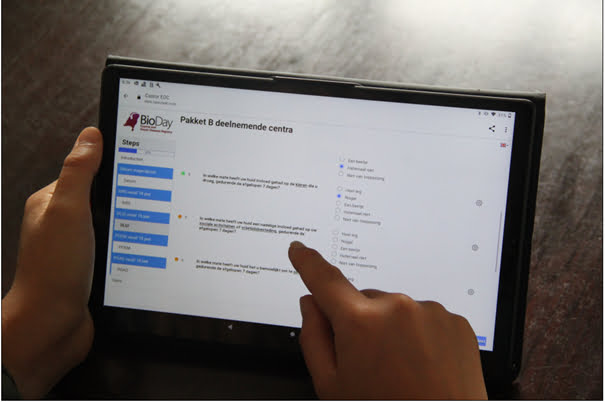
At each outpatient visit, the effect of the medication is evaluated by looking at the skin. Additionally, we will ask about side effects, health complaints, check various blood values and ask patients to complete a number of questionnaires. These questionnaires include questions about the impact of the atopic dermatitis and its treatment on daily life.

In addition, a number of sub-studies are in progress, which include the following areas of focus:

  • Atopic dermatitis and asthma
  • Atopic dermatitis and food allergies
  • Atopic dermatitis and conjunctivitis
  • Atopic dermatitis in combination with hand eczema

The BioDay medication

Biologicals
Dupilumab - since October 2017

Tralokinumab - since November 2021

Lebrikizumab - since December 2024

JAK inhibitors
Baricitinib - as of January 2021

Upadacitinib - as of October 2021

Abrocitinib - since March 2022

Consent, privacy and sponsorship

The BioDay study protocol has been approved by the Medical Ethics Committee of the University Medical Centre Utrecht and follows Good Clinical Practice guidelines. The BioDay registry is also registered with ClinicalTrials.gov. This is a database of clinical trials conducted worldwide. All participating patients are informed, both written and verbally, about what participating in the BioDay Registry means for them. If the patient chooses to participate, an informed consent form must be signed.

The collection of data in the registry will comply with all applicable confidentiality, privacy and data protection laws. At each participating hospital, consent is obtained from the local Medical Ethics Review Committee and/or Board of Directors according to the locally established policy.

The BioDay Registry is financially supported by Sanofi/Regeneron, Abbvie, Lilly and LEO Pharma. These are pharmaceutical companies that do not have any access to the personal data of the patients in the trial. As a result, they have no influence on the processing of the data and the preparation of the reports. However, the reports are presented to them.
Scientific publications

Scientific publications resulting from data from the BioDay registry appear with some regularity.
Below is an overview of publications to date.

April 2026
Dupilumab versus tralokinumab in atopic dermatitis: A propensity score-adjusted comparison from BioDay

Van der Gang, et al.


August 2025
Upadacitinib in daily practice for refractory atopic dermatitis in adolescents: a case series of the BioDay registry

Vroman, et al. 

PubMed

August 2025
Topical Steroid Withdrawal: Perspectives of Dutch Healthcare Professionals

Vroman, et al. 

PubMed

May 2025
Treatment goals and preferences of pediatric atopic dermatitis patients, young adults, and caregivers

Van der Rijst, et al. 

PubMed

May 2025
Complementary Analysis of Local and Systemic Effects of Dupilumab in Paediatric AD Using Tape Strips and Serum

van der Rijst et al.

PubMed

March 2025
Infection risk in atopic dermatitis patients treated with biologics and JAK inhibitors: BioDay results

Van der Gang, et al. 

PubMed

March 2025
Dupilumab-Associated Ocular Surface Disease in Paediatric Atopic Dermatitis Patients: Results From the BioDay Registry

Van der Rijst, et al. 

PubMed

February 2025
Ocular surface disease in pediatric patients with moderate-to-severe atopic dermatitis

van der Rijst & Velduis, et al. 

Pubmed

January 2025
Increased Levels of Inflammatory Proteins, Including TARC/CCL17, in Skin of AD Patients During JAK Inhibitor Treatment

Boesjes, et al.

PubMed

December 2024
Tralokinumab Treatment in Adult Atopic Dermatitis Patients: 28-Week Evaluation of Clinical Effectiveness, Safety, Serum Proteins and Total IgE Levels

Dekker, et al. 

Pubmed

October 2024
Type 2 Immune-Dominant Endotype Is Not Associated With Increased Responsiveness to Dupilumab Treatment in Adult Atopic Dermatitis Patients

Dekker, et al. 

Pubmed

October 2024
Drug Survival of Dupilumab, Methotrexate, and Cyclosporine A in Children With Atopic Dermatitis

van der Rijst, et al. 

Pubmed

July 2024
Dupilumab induces a significant decrease of food specific immunoglobulin E levels in pediatric atopic dermatitis patients

van der Rijst, et al. 

Pubmed

June 2024
Effect of dupilumab on asthma and aeroallergen sensitization in pediatric atopic dermatitis patients: Results of the BioDay registry

van der Rijst, et al. 

Pubmed

February 2024
Real-world Experience of Abrocitinib Treatment in Patients with Atopic Dermatitis and Hand Eczema: Up to 28-week Results from the BioDay Registry

Kamphuis, et al. 

Pubmed

December 2023
Differential dynamics of TARC during JAK-inhibitor therapy compared to biological therapies targeting type 2 inflammation

Boesjes, et al. 

Pubmed

October 2023
Dupilumab-Associated Lymphoid Reactions in Patients With Atopic Dermatitis

Boesjes, et al. 

Pubmed

September 2023
Biologicals for pediatric patients with atopic dermatitis: practical challenges and knowledge gaps

van der Rijst, et al. 

Pubmed

September 2023
IgE levels in patients with atopic dermatitis steadily decrease during treatment with dupilumab regardless of dose interval

Dekkers, et al. 

Pubmed

May 2023
Successful tapering of dupilumab in atopic dermatitis patients with low disease activity: a large pragmatic daily practice study from the BioDay registry

Spekhorst, et al. 

Pubmed

March 2023
Biological Tipping Point in Patients with Atopic Dermatitis Treated with Different Dosing Intervals of Dupilumab

Dekkers, et al.

Pubmed

March 2023
Dupilumab-associated ocular surface disease in atopic dermatitis patients: clinical characteristics, ophthalmic treatment response, and conjunctival goblet cell analysis

Achten, et al. 

Pubmed

March 2023
Switching from dupilumab to tralokinumab in atopic dermatitis patients with ocular surface disease: Preliminary case series

Achten, et al. 

Pubmed

March 2023
Economic and Humanistic Burden in Paediatric Patients with Atopic Dermatitis

Achten, et al. 

Pubmed

February 2023
Muscle and joint pain during dupilumab treatment for atopic dermatitis: Lack of association with antinuclear antibodies

Boesjes, et al. 

Pubmed

February 2023
Effectiveness of Upadacitinib in Patients with Atopic Dermatitis including those with Inadequate Response to Dupilumab and/or Baricitinib: Results from the BioDay Registry.

Boesjes, et al. 

Pubmed

January 2023
High dupilumab levels in tear fluid of atopic dermatitis patients with moderate-to-severe ocular surface disease

Achten, et al. 

Pubmed

January 2023
Experiences from daily practice of upadacitinib treatment on atopic dermatitis with a focus on hand eczema: Results from the BioDay registry

Kamphuis, et al. 

Pubmed

January 2023
The positive effect of dupilumab on comorbid asthma in patients with atopic dermatitis

Spekhorst, et al. 

Pubmed

December 2022
Biomarkers in tear fluid of dupilumab-treated moderate-to-severe atopic dermatitis patients

Achten, et al. 

Pubmed

December 2022
Dupilumab in daily practice for the treatment of pediatric atopic dermatitis: 28-week clinical and biomarker results from the BioDay registry

Kamphuis, et al. 

Pubmed

November 2022
Daily Practice Experience of Baricitinib Treatment for Patients with Difficult-to-Treat Atopic Dermatitis: Results from the BioDay Registry.

Boesjes, et al.

Pubmed

November 2022
Dupilumab has a profound effect on specific-IgE levels of several food allergens in atopic dermatitis patients

Spekhorst, et al.

Pubmed

November 2022
Association of Serum Dupilumab Levels at 16 Weeks With Treatment Response and Adverse Effects in Patients With Atopic Dermatitis: A Prospective Clinical Cohort Study From the BioDay Registry

Spekhorst, et al.

Pubmed

September 2022
Dupilumab Drug Survival and Associated Predictors in Patients With Moderate to Severe Atopic Dermatitis: Long-term Results From the Daily Practice BioDay Registry.

Spekhorst, et al. 

Pubmed

July 2022
Patient-centered dupilumab dosing regimen leads to successful dose reduction in persistently controlled atopic dermatitis

Spekhorst, et al.

Pubmed

March 2022
Ocular surface disease is common in moderate-to-severe atopic dermatitis patients

Achten, et al.

Pubmed

March 2022
Identification of Risk Factors for Dupilumab-associated Ocular Surface Disease in Patients with Atopic Dermatitis.

Achten, et al.

Pubmed

August 2021
Rapid and Sustained Effect of Dupilumab on Work Productivity in Patients with Difficult-to-treat Atopic Dermatitis: Results from the Dutch BioDay Registry.

Ariëns, et al.

Pubmed

June 2021
Eczema control and treatment satisfaction in atopic dermatitis patients treated with dupilumab - a cross-sectional study from the BioDay registry.

Oosterhaven, et al.

Pubmed

February 2021
Early and long-term effects of dupilumab treatment on circulating T-cell functions in moderate-to-severe atopic dermatitis patients.

Bakker, et al.

Pubmed

December 2020
EASI p-EASI: Predicting disease severity in atopic dermatitis patients treated with dupilumab using a combination of serum biomarkers.

Bakker, et al.

Pubmed

October 2020
Long-term follow-up and treatment outcomes of conjunctivitis during dupilumab treatment in patients with moderate-to-severe atopic dermatitis.

Achten, et al.

Pubmed

September 2020
Dupilumab shows long-term effectiveness in a large cohort of difficult-to-treat atopic dermatitis patients in daily practice: 52-week results from the Dutch BioDay registry.

Ariëns, et al.

Pubmed

September 2020
Two-year Drug Survival of Dupilumab in a Large Cohort of Difficult-To-Treat Adult Atopic Dermatitis Patients Compared to Cyclosporine A and Methotrexate: Results From the BioDay Registry

Spekhorst, et al.

Pubmed

January 2020
Dupilumab is very effective in a large cohort of difficult-to-treat adult atopic dermatitis patients: First clinical and biomarker results from the BioDay registry.

Ariëns, et al.

Pubmed

October 2019
Dupilumab facial redness: Positive effect of itraconazole.

De Beer, et al.

Pubmed

August 2019
Effect of dupilumab on hand eczema in patients with atopic dermatitis: An observational study.

Oosterhaven, et al.

Pubmed

May 2019
Goblet cell scarcity and conjunctival inflammation during treatment with dupilumab in patients with atopic dermatitis.

Bakker, et al.

Pubmed

Learn more

Follow Us

Download patient information about BioDay here

Download the patient leaflet on biologicals here

Download the patient leaflet on JAK inhibitors here

Download the patient leaflet about dupilumab here

Download the patient brochure about tralokinumab disposable syringe (NL) here.

Download the patient brochure about tralokinumab Adolescents (NL) here.

Downloadthe patient brochure about tralokinumab disposable syringe (Arabic) here.

Download here Patient leaflet tralokinumab (ENG)


Download the patient leaflet about lebrikizumab here

Download here Patientleaflet lebrikizumab(ENG)

Download the patient leaflet about upadacitinib here

Download patient leaflet on upadacitinib adolescents here

Download the patient leaflet about abrocitinib here

Download the patient leaflet about baricitinib here