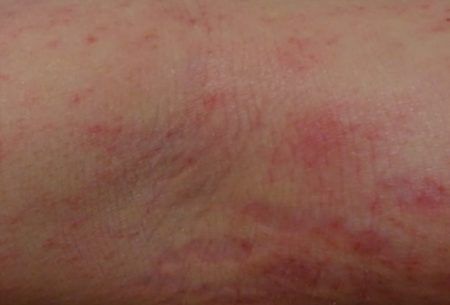
Het BioDay register is een zogenoemd prospectief cohortonderzoek. Dit betekent dat patiënten voor een bepaalde periode worden gevolgd. De behandelend arts of verpleegkundig specialist stelt samen met de patiënt een behandelplan op voor het constitutioneel eczeem. Krijgt een patiënt behandeling met een nieuw geneesmiddel dan worden gegevens verzameld over het gebruik van dit geneesmiddel. Deelname aan het onderzoek beïnvloedt de behandeling op geen enkele manier.
Het BioDay register wordt gecoördineerd door het Nationale Expertise Centrum voor Constitutioneel Eczeem van het Universitair Medisch Centrum Utrecht (UMCU) en de afdeling Dermatologie van het Universitair Medisch Centrum Groningen (UMCG). Tevens zijn er verschillende andere ziekenhuizen in Nederland bij het BioDay register aangesloten.
Patiënten die deelnemen aan het BioDay register worden voor ten minste vijf jaar gevolgd. Zij zijn onder behandeling voor hun constitutioneel eczeem in één van de deelnemende centra. Door de behandelend arts wordt gekeken of de patiënt geschikt is voor deelname aan het BioDay register.
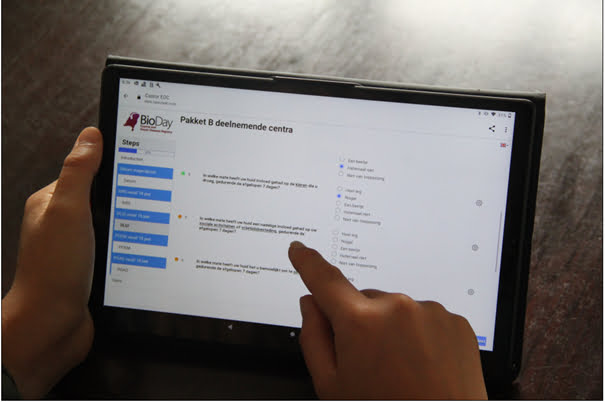
Bij elk poliklinisch bezoek zal het effect van de medicatie worden onderzocht door de huid te bekijken. Daarnaast wordt er gevraagd naar bijwerkingen, gezondheidsklachten, worden er verschillende bloedwaarden gecontroleerd en vragen wij patiënten een aantal vragenlijsten in te vullen. Deze vragenlijsten gaan onder andere over de invloed van het eczeem en de behandeling hiervan op het dagelijks leven.
Daarnaast lopen er verschillende deelonderzoeken met o.a. de volgende aandachtsgebieden:
Biologicals
Dupilumab – sinds oktober 2017
Tralokinumab – sinds november 2021
Lebrikizumab – sinds december 2024
Nemolizumab – sinds februari 2026
JAK-remmers
Baricitinib – sinds januari 2021
Upadacitinib – sinds oktober 2021
Abrocitinib – sinds maart 2022
Het BioDay onderzoeksprotocol is goedgekeurd door de Medisch Ethische Commissie van het Universitair Medisch Centrum Utrecht en volgt de richtlijnen van Good Clinical Practice. Het BioDay register staat tevens geregistreerd bij ClinicalTrials.gov. Dit is een database van klinische studies die wereldwijd worden uitgevoerd. Alle deelnemende patiënten worden schriftelijk en mondeling geïnformeerd over wat deelname aan het BioDay register voor hen betekent. Als de patiënt besluit om mee te willen doen, dient er een toestemmingsformulier (“informed consent”) getekend te worden.
Bij het verzamelen van de gegevens in het register wordt voldaan aan alle geldende vertrouwelijkheidseisen en wetgeving met betrekking tot privacy- en gegevensbescherming. In elk deelnemend ziekenhuis wordt volgens het daar geldende beleid toestemming van de lokale Medisch Ethische Toetsingscommissie en/of de Raad van Bestuur verkregen.
Het BioDay register wordt financieel gesteund door Sanofi/Regeneron, Abbvie, Lilly en LEO Pharma. Dit zijn farmaceutische bedrijven die op geen enkele manier inzage hebben in de persoonlijke gegevens van de deelnemende patiënten. Ze hebben dan ook geen invloed op de verwerking van gegevens en het opstellen van rapportages. De rapportages worden wel aan hen gepresenteerd.
Met enige regelmaat verschijnen er wetenschappelijke publicaties die tot stand zijn gekomen uit data van het BioDay register.
Hieronder een overzicht met publicaties tot nu toe.
Vroman, et al.
Veldhuis, et al.
Vroman, et al.
Van der Gang, et al.
Elfiky, et al.
Vroman, et al.
Van der Gang, et al.
Vroman, et al.
Vroman, et al.
Van der Rijst, et al.
van der Rijst et al.
Van der Gang, et al.
Van der Rijst, et al.
van der Rijst & Velduis, et al.
Boesjes, et al.
Dekker, et al.
Dekker, et al.
van der Rijst, et al.
van der Rijst, et al.
van der Rijst, et al.
Kamphuis, et al.
Boesjes, et al.
Boesjes, et al.
van der Rijst, et al.
Dekkers, et al.
Spekhorst, et al.
Dekkers, et al.
Achten, et al.
Achten, et al.
Achten, et al.
Boesjes, et al.
Boesjes, et al.
Achten, et al.
Kamphuis, et al.
Spekhorst, et al.
Achten, et al.
Kamphuis, et al.
Boesjes, et al.
Spekhorst, et al.
Spekhorst, et al.
Spekhorst, et al.
Spekhorst, et al
Achten, et al.
Achten, et al.
Ariëns, et al.
Oosterhaven, et al.
Bakker, et al.
Bakker, et al.
Achten, et al.
Ariëns, et al.
Spekhorst, et al.
Ariëns, et al.
De Beer, et al.
Oosterhaven, et al.
Bakker, et al.
Download hier de patiënten informatie over BioDay
Download hier de patiëntenfolder over biologicals
Download hier de patiëntenfolder over JAK-remmers
Download hier de patiëntenfolder over dupilumab
Download hier de patiëntenfolder over tralokinumab wegwerpspuit (NL)
Download hier de patiëntenfolder over tralokinumab Adolecenten (NL)
Download hier de patiëntenfolder over tralokinumab wegwerpspuit (Arabisch)
Download hier Patient leaflet tralokinumab (ENG)
Download hier de patiëntenfolder over lebrikizumab
Download hier Patient leaflet lebrikizumab (ENG)
Download hier de patiëntenfolder over Nemolizumab voor PN
Download hier de patiëntenfolder over Nemolizumab voor AD
Download hier de patiëntenfolder over upadacitinib
Download hier de patiëntenfolder over upadacitinib adolescenten
Download hier de patiëntenfolder over abrocitinib
Download hier de patiëntenfolder over baricitinib
| Cookie | Duur | Beschrijving |
|---|---|---|
| cookielawinfo-checkbox-analytics | 11 months | This cookie is set by GDPR Cookie Consent plugin. The cookie is used to store the user consent for the cookies in the category "Analytics". |
| cookielawinfo-checkbox-functional | 11 months | The cookie is set by GDPR cookie consent to record the user consent for the cookies in the category "Functional". |
| cookielawinfo-checkbox-necessary | 11 months | This cookie is set by GDPR Cookie Consent plugin. The cookies is used to store the user consent for the cookies in the category "Necessary". |
| cookielawinfo-checkbox-others | 11 months | This cookie is set by GDPR Cookie Consent plugin. The cookie is used to store the user consent for the cookies in the category "Other. |
| cookielawinfo-checkbox-performance | 11 months | This cookie is set by GDPR Cookie Consent plugin. The cookie is used to store the user consent for the cookies in the category "Performance". |
| viewed_cookie_policy | 11 months | The cookie is set by the GDPR Cookie Consent plugin and is used to store whether or not user has consented to the use of cookies. It does not store any personal data. |